- AI Search & Visibility
Breaking: Google’s AI Mode is Live in NZ & Australia
Google has just switched on ‘AI Mode’ in search for New Zealand and Australian businesses. This is a significant change to how people find information – and something we’ve been planning for a while now. Essentially, we’re moving away from the ten blue links we’ve
By Jordan McFadyen4 min read
Updated 22 January 2026
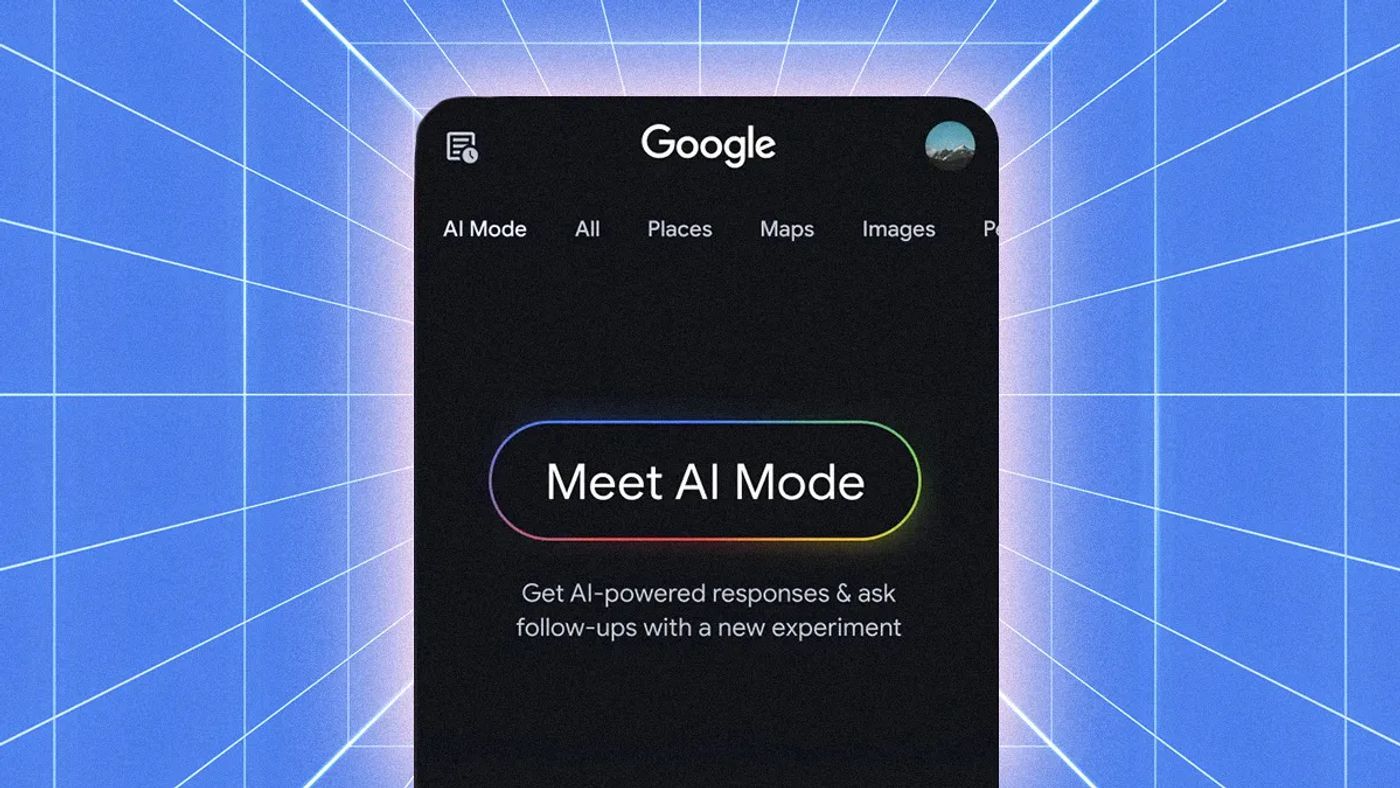
Google has just switched on ‘AI Mode’ in search for New Zealand and Australian businesses.
This is a significant change to how people find information – and something we’ve been planning for a while now.
Essentially, we’re moving away from the ten blue links we’ve optimised for over the last decade.
Instead, search is becoming a conversation.
For us here in New Zealand, we’ve been lucky that this feature has been live in the US for a little while, so we’ve had a chance to watch, learn, and adapt our strategy.
And in this article, we’ll break down what AI Mode actually is, what we’ve learned from its impact overseas, and give you a practical plan to make sure your business is ready.
What Actually Is AI Mode?
So, first things first, what is AI Mode?
This is different to AI Overviews (the summary at the top of the Google search), instead it’s a completely different way of using Google.
Instead of just matching keywords to websites, it’s built to understand a user’s intent and built for conversations (think of how you use ChatGPT and other LLM chatbots)
Here’s the summary:
- It’s Conversational: Think of it more like using ChatGPT. A user can ask a complex, multi-step question like, ‘Find me a 3-day itinerary for a family trip to Queenstown that includes hiking and good food,’ and AI Mode will do the heavy lifting. It allows searchers to delve deeper into topics in a more conversational way.
- It uses ‘Query Fan Out’: When you ask one question, the AI automatically asks dozens of related questions in the background – it searches for reviews, pricing, and opening hours, and combines it all into one comprehensive answer. Your website is no longer the primary destination; it’s one of many sources for the AI’s answer.
- It’s Deeply Personalised: This is the critical part. The search response you get can be completely different from what I get for the exact same query. AI Mode builds a picture of you based on your Gmail inbox, your search history, and even the documents in your Google Drive to tailor its results. This makes traditional ranking positions almost irrelevant.
What You Need to Do Now
So, what do we do about it?
Based on what we’ve seen in the US and what we know about how these AI models work, the strategy comes down to three core pillars.
Essentially, this is about strengthening your foundations, not chasing algorithm hacks.
Get Your House in Order
Before you can do anything else, you have to make it easy for the AI to find and understand your information. Strong SEO fundamentals are critical for what we can call ‘Generative Engine Optimisation’.
- First, Structured Data: This is non-negotiable. Use Schema markup on your website to plainly tell Google what your content is about: your services, hours, prices. It removes the guesswork for the AI.
- Second, Get Conversational with Your Content: Rewrite your content to match natural language and long-tail keywords. Create FAQ pages that directly address the real questions your customers ask. This makes your content ‘answer-ready’ for the AI to grab.
- Third, Basic Accessibility and Speed: Your site must be fast and easy for crawlers to access. Slow sites get pushed down the list. Ask your marketing person to audit your site’s speed and crawlability. This is the foundation.
Build ‘Trusted Visibility’ Outside Your Website
I actually think this is the most important part.
The AI is learning about you from what other people say about you.
Get this – less than 25% of AI citations actually come from a brand’s own website. Your reputation is now your most valuable asset.
- Encourage Reviews: Your Google Business Profile is critical. Actively encourage customer reviews. Those are powerful, independent signals of trust.
- Get Mentioned on Other Reputable Sites: This is about earning genuine mentions on sites your customers actually trust. Think guest articles, features in industry publications, or being interviewed on a podcast.
- Focus on a Niche: Become the go-to expert in a defined area. When you’re seen as the authority, you’re more likely to be mentioned and cited.
Make Sure Your Google Ads are AI-Optimised
From a paid media perspective, AI-powered campaigns are the best way to get visibility within these new AI-driven experiences.
- Align with Modern Search Excellence: Your Google Ads account structure needs to be up to date. This means measuring what’s important, using an AI-friendly account structure, and having your keyword selection and creative messaging on point.
- Test AI Max: Google’s AI Max campaigns are built for this. They use ‘keyword-less’ search, looking at the intent behind a search, not just the words. It finds customers you didn’t even know you were looking for. If you have the foundations right, like accurate conversion tracking and a solid website, set up an experiment.
Final Advice: Have a Play
Finally, the best thing you can do is get hands-on.
Open Google, switch on AI Mode, and start experimenting.
Ask it the complex questions your customers ask you. See what it spits out, and more importantly, see what sources it’s using.
This will give you the clearest picture of where you stand and what you need to work on.
The game is fast shifting from simply chasing short-term traffic, to building long-term brand equity.
The way people find businesses is changing. Your goal is to be the most credible and helpful source of information in your industry.
If you focus on that, you’ll be in a strong position.

Written by
Director & Founder
I’m building Done By Nine into a purposeful marketing leader for ambitious businesses navigating the AI era.